 Three days after Donald Trump took office in 2017, the Pharmaceutical Research and Manufacturers of America trade association launched a multimillion campaign to bolster its image in the face of criticism from across the political spectrum of exorbitant drug price hikes. Under the banner of Go Boldly, PhRMA sought to persuade lawmakers and the public that biopharmaceutical producers were doing great things to improve our quality of life and were not just price-gouging crooks.
Two years later, the campaign is still in operation, apparently because the public has not been won over. That’s not surprising, given that Big Pharma is still behaving badly. Relieved that the Trump Administration’s drug cost initiative turned out to be toothless, major drug makers are implementing new rounds of price increases.
Promoting the idea that the industry is preoccupied with innovation is also being made more difficult by the announcement that Bristol-Myers Squibb is seeking to spend $74 billion to acquire rival Celgene. The deal would unite two companies that each have been struggling with their cancer treatments.
Bristol’s Opdivo drug has been losing ground to Merck’s Keytruda while Celgene has been experiencing setbacks in clinical trials and is facing a patent expiration in 2022 for its major product Revlimid. A marriage of the two companies would serve mainly as an excuse to eliminate jobs and raise prices, while doing little that would benefit patients.
The merger would also bring together two companies that have checkered legal and regulatory track records. According to Violation Tracker, Bristol has racked up nearly $1 billion in fines and settlements for a wide range of offenses. These include a $515 million settlement with the Justice Department of allegations relating to drug marketing and pricing; a $150 million settlement with the SEC concerning accounting fraud; a $14 million settlement of Foreign Corrupt Practices Act allegations; and a $3.6 million settlement of Clean Air Act violations.
It has also faced criminal charges, including one case in which it paid $300 million and got a deferred prosecution agreement to resolve allegations of accounting manipulation and another in which it pled guilty to lying to the federal government during an investigation of a secret agreement to thwart a generic competitor to its blood thinner Plavix.
For its part, Celgene paid $280 million in 2017 to resolve allegations that it promoted two cancer drugs for uses not approved by the Food and Drug Administration.
The prospect of one ethically challenged and market weakened drug company paying $74 billion to acquire another is emblematic of what is wrong with the U.S. pharmaceutical industry. It provides additional justification for aggressive reforms such as the bill introduced by Bernie Sanders and Ro Khanna that would allow the federal government to authorize generic alternatives to overpriced drug or the proposal by Elizabeth Warren and Jan Schakowsky that the federal government itself produce generic alternatives under certain circumstances.
If we want to Go Boldly, let’s do it with alternatives that empower patients not drugmakers.
 The Trump Administration has been taking steps to weaken its enforcement activities against corporate criminals and regulatory violators, but diligent prosecutors and career agency administrators are still trying to do their job. Over the course of 2018 there has been a steady stream of announcements of substantial penalties imposed on major corporations for a wide range of offenses. The following is a selection of significant cases resolved during the year:
 According to the grievance-based worldview of Donald Trump, the United States is constantly being cheated. He purports to be addressing this through his trade policies and his attitudes toward international organizations such as NATO. Yet he seems to be a lot less concerned about another kind of cheating: the ongoing fraud committed against the federal government by military contractors.
 Is it just a coincidence that Donald Trump has decided to embrace criminal justice reform just at the time he is more likely to become a defendant himself? He’s not the only party that may have mixed motives in supporting the legislation that is being hyped as an outstanding expression of bipartisanship.
 Democrats seized the House while Republicans increased their majority in the Senate, but the unambiguous and across-the-board winner in the election was regulation – specifically, regulation of the health insurance industry.
 The slow but steady weakening of bank regulation is continuing. Responding to legislation passed by Congress earlier this year, the Federal Reserve just
  Climate crisis denial has become an article of faith for rightwing politicians, including the current occupation of the Oval Office, but the primary culprits are the fossil fuel corporations that for decades covered up and obfuscated the truth about greenhouse gases. Now one of those corporations may finally pay a steep penalty for its decades of deception.
 The bankruptcy filing, store closings and general uncertainty surrounding the future of Sears have prompted a spate of nostalgic business-page articles about the history of the once dominant retailer. Whether or not the chain survives, it is important not to sugarcoat its past.
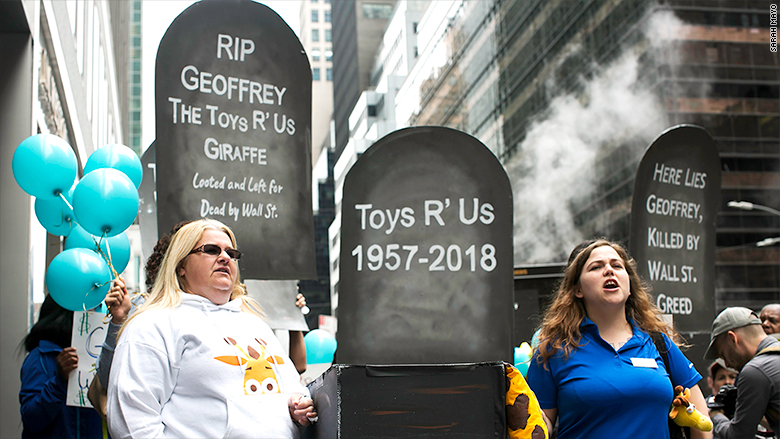 The rich own a large and growing share of the wealth in the U.S. economy, but more than $20 trillion in assets is held by financial entities that represent a much broader portion of the population: pension funds. According to a
  Many steelworkers thought they had hit the jackpot. Back in March, Donald Trump announced steep tariffs on metals imported from most of the world, and three months later he added close allies such as Canada and Mexico to the list. As with many of his other economic policies, Trump claimed that the move was designed to benefit U.S. workers, a few of whom were brought to the White House with their hardhats to serve as props when the measure was first announced.
You must be logged in to post a comment.