For Once a Corporation is in the Right

The Dirt Diggers Digest is normally in the business of cheering on regulators and prosecutors as they go after rogue corporations. I tend to be skeptical of claims of government overreach made by business apologists.

In the bizarro world created by the Trump Administration, I am at the moment forced to take a different stance. I find myself in the unfamiliar position of rooting for a major corporation in a dispute with a federal agency.

I am speaking, of course, about the conflict between the Walt Disney Company and the Federal Communications Commission. Disney and its American Broadcasting Company subsidiary have taken the unusual step of bringing suit to halt to an FCC process that threatens ABC’s broadcast licenses.

Like so much of what the Trump Administration does, the FCC’s move is based on a flimsy premise; namely, the claim that ABC has engaged in prohibited diversity practices. Trump and his administration’s officials like to bandy about the illegal DEI charge as if it had some solid basis in law. In fact, it derives solely from dubious executive orders issued by Trump asserting that any policies designed to remedy discrimination are themselves discriminatory.

The argument is especially problematic when it comes to the FCC. Back in the 1960s, public interest groups pressured the agency to adopt policies to combat discrimination and promote diversity in the communications industry. The policies required broadcasters to take positive steps to promote the hiring and promotion of minorities and women.

The FCC’s MAGA-friendly chairman Brendan Carr may not be aware that his agency’s website still has a page on equal employment rules and policies that includes the following statement: “The EEO rules require broadcasters employing five or more full-time employees, and MVPDs [multichannel video programming distributors] employing six or more full-time employees, to maintain an EEO recruitment program. The recruitment rules include requirements to provide notice of job vacancies and to undertake additional outreach measures to all qualified job candidates, such as holding job fairs and establishing scholarship programs.” That sure sounds like DEI.

Apart from the FCC’s hypocrisy, there is the fact that Disney has already been reversing many of its diversity initiatives and has removed references to DEI from its SEC filings.

In short, Disney is well justified in arguing that the FCC’s unorthodox review of ABC’s licenses has little to do with DEI and is, instead, part of Trump’s vendetta against what he views as unfriendly news media outlets. Disney’s lawyers did not have to work very hard to make their case. In their court filing, they quoted various statements from Trump himself calling for the revocation of licenses of  such outlets.

None of this is to claim that Disney is a paragon of corporate virtue. The company has a problematic history when it comes to labor practices at its theme parks and in the foreign sweatshops that produced its merchandise.

It has also faced charges of discrimination, and last year it agreed to pay $43 million to settle class action litigation alleging it paid thousands of women in middle management less than their male counterparts But such serious discrimination is not what the FCC is targeting.

As long as this regulator is helping to carry out Trump’s grievance campaign, it does not deserve support from those of us concerned about corporate accountability.

How To Confront Corporate Abuses

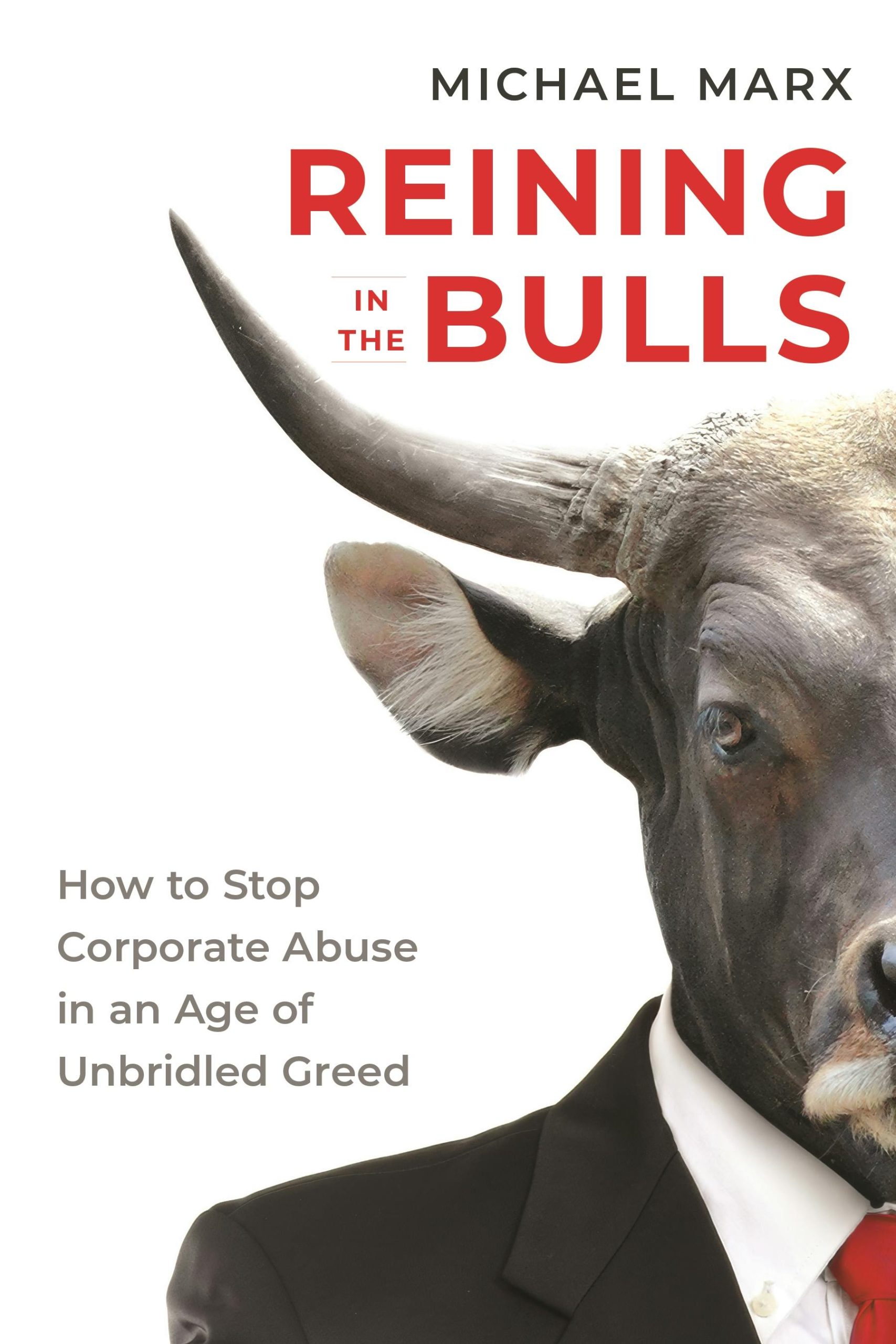
Amid the endless threats to democracy and social well-being posed by the Trump Administration, less attention may be given to the more enduring harms created by the powerful corporations that control so much of our life. A valuable reminder of the importance of confronting those business behemoths can be found in a new book by Michael Marx called Reining in the Bulls: How to Stop Corporate Abuses in an Age of Unbridled Greed.

Marx has produced the first comprehensive guide to what are known as corporate campaigns: efforts by environmental groups and other civil society organizations to pressure companies to alter specific detrimental practices. They are also called pressure campaigns, market campaigns, or anti-corporate campaigns. Examples include the Greenpeace effort to get Nestle to stop using palm oil linked to rainforest destruction in Indonesia and the campaign by the Natural Resources Defense Council and U.S. PIRG to get Columbia Sportswear to eliminate toxic PFAS forever chemicals from its products.

The “how to” in Marx’s subtitle should be taken literally. His book provides detailed tips on every aspect of a corporate campaign—from documenting the harm and choosing the target company to the choice of tactics, recruitment of allies, fundraising, and much more. For those situations in which companies bend to the pressure, he offers advice on negotiating agreements that will institutionalize the victory. For those in which the company resists, he offers guidance on dealing with the counterattack. (Full disclosure: in his chapter on power-mapping the target company, Marx makes a brief complimentary reference to my Dirt Diggers Digest research guide.)

Marx is well qualified for this task. For the past 30 years, he has worked on corporate campaigns with groups such as Rainforest Action Network, ForestEthics (now Stand.earth), and the Sierra Club. He founded Corporate Ethics International, which gave rise to the Business Ethics Network, a sort of trade association for corporate campaign groups.

Like all good handbooks, Reining in the Bulls is full of lists such as the Corporate Ethics Ten Commandments and the Typical Stages of a Corporate Campaign. There are various step-by-step guides to campaign elements, including shareholder advocacy, recruitment of corporate insiders, and mobilization of actions both online and in the streets. There is even a chapter on the challenges (and rewards) of devoting one’s life to corporate campaigns.

Despite all this valuable content, there are a couple of gaps. First, I would have liked to see more attention paid to corporate campaigns mounted by labor unions. In his preface, Marx mentions the path-breaking role of the campaign against J.P. Stevens conducted by the Amalgamated Clothing and Textile Workers Union in the 1970s, and he notes a few others such as the Steelworkers campaign against Ravenswood Aluminum in the 1990s. Yet, for the rest of the book, unions are pretty much ignored, even though Marx has a whole chapter on organizing employees of target companies. The chapter on organizing shareholders does not discuss the important work done by activist union pension funds.

It would also have been helpful to have more content oriented to grassroots corporate campaigns. Marx focuses on efforts launched by groups with significant resources, including paid staff, foundation funding, and a robust online presence. It thus makes sense that he recommends, for instance, that organizations carry liability insurance and pay to obtain targeted mailing lists.

But what about groups that are operating on a shoestring? They are the ones that need the most help in conducting their campaigns. Much of Marx’s guidance will serve them well, but they have many additional challenges.

Addressing those challenges is all the more urgent, given that the most vibrant form of corporate campaigning seen today are the grassroots groups that have sprung up across the country to fight against the explosion of data center construction in support of the AI mania. They need all the help they can get.

That said, I hope Marx’s book inspires more people to take up the noble cause of confronting corporate abuses of all kinds.

Trump’s Latest Sham Tariffs

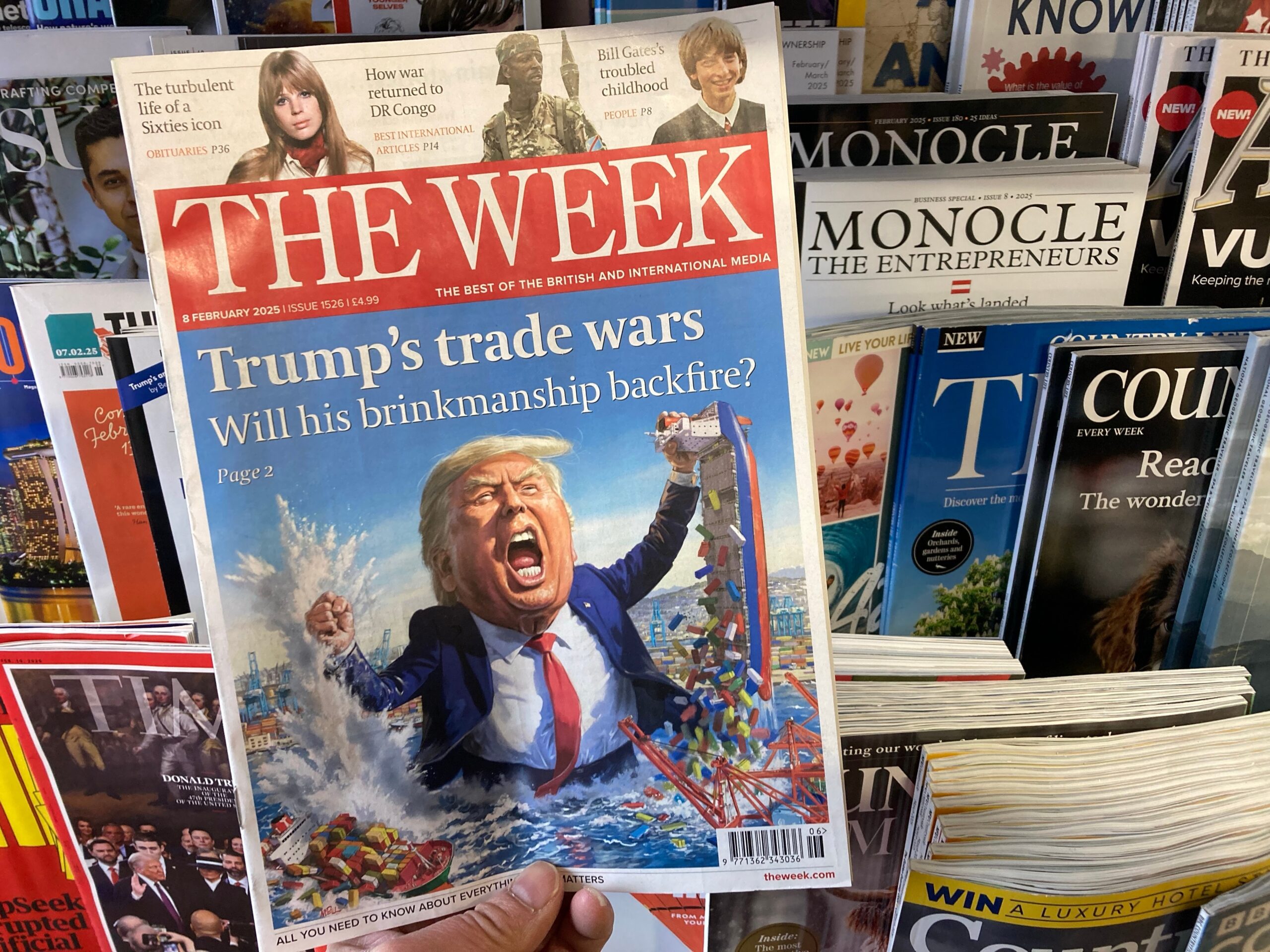
Donald Trump needs tariffs almost as much as he needs flattery. For him they function less as a trade tool and more as a cudgel that allows him to exercise his will against other countries. They also create a system under which domestic corporations need to curry favor with him to get exemptions for their specific products.

Given their importance to him, Trump is willing to do just about anything to preserve his tariff initiatives. That includes ignoring the powers of Congress and concocting far-fetched rationales to try to get around adverse Supreme Court rulings.

The latest concoction is the recent announcement that Trump is imposing a new set of tariffs on 60 countries because of their supposed failures to prevent the importation of goods produced with forced labor. These duties range from 10 to 12.5 percent.

Forced labor is a real problem, but Trump is hardly a credible champion of labor rights. One only has to look at his inconsistent posture toward China, widely viewed as the biggest culprit.

The report that the U.S. Trade Representative issued to justify the new tariffs contains very little in the way of real evidence. The fact that it lumps countries such as Australia and Canada together with China makes it all the more dubious.

Critics of Trump’s plan argue that the tariffs will make it more difficult for countries to work together to adopt stronger measures against forced labor. The U.S. has already been an obstacle to such efforts, given its refusal to ratify the International Labor Organization’s 2014 Protocol to the Forced Labor Convention of 1930.

There is also evidence that Trump’s tariff pretext may be undermining legitimate work being done to combat forced labor in some countries. Two NGOs in Chile, Libera and Ecoceanos, report that their staff members have received death threats and other forms of intimidation after the groups were blamed for the new U.S. tariff on Chilean goods.

In a published interview, the director of Ecoceanos, acknowledged that his organization did provide information to the U.S. Trade Representative regarding abusive conditions in Chilean agriculture and fish farming, but he said the group recommended against raising tariffs and instead sought help in getting the Chilean government to adopt stronger measures against forced labor.

Back in the U.S., the new Trump tariffs are not going unchallenged. A group of 25 states have filed a lawsuit in the U.S. Court of International Trade arguing that the measures are pretextual and are inconsistent with prior forced labor cases brought under Section 301 of the Trade Act of 1974 and the language of that statute.

The states’ complaint points out that the “USTR identifies no mechanism by which an economy could be released from the tariffs through strengthened forced-labor-import enforcement, sets no benchmarks to measure the effectiveness of a country’s import controls, and erects an effective floor of 10% even on countries that the USTR acknowledges are making efforts to combat forced-labor-imports, signaling that no level of remedial action would suffice to lift the tariffs under this Administration.”

It is widely expect that the tariffs will not survive judicial scrutiny, but until that happens they will bring harm both to economies around the world and to the real movement against forced labor.

Trial Lawyers Outshine Federal Prosecutors

Johnson & Johnson has just agreed to pay at least $5.5 billion to settle tens of thousands of claims that its talcum powder products cause ovarian cancer. A federal court recently gave final approval to a settlement in which Anthropic will pay out $1.5 billion to authors who claimed the AI company improperly used their work to train its Claude chatbot. Last month, another federal court gave preliminary approval to a settlement in which Visa and Mastercard will reduce swipe fees charged to merchants by tens of billions of dollars over the next decade.

While all this has been happening, the Justice Department seems to be doing everything possible to avoid major cases against large corporations. The DOJ has not announced a single case resolution with a fine anywhere near $1 billion since Trump retook office. Many investigations have been dropped, and others are not starting in the first place.

It used to be that federal prosecutors and plaintiff’s lawyers worked in a kind of coordination. The feds would bring a criminal action against a company for misconduct and thereby set the stage for a follow-on private civil action.

Now the DOJ is making life a lot easier for rogue companies. Along with abandoning many prosecutions, Justice is allowing many corporate defendants to avoid criminal charges by offering them leniency in the form of non-prosecution agreements, deferred protection agreements, and declinations. This makes those follow-on civil lawsuits more challenging.

Additional obstacles have been erected by the business-friendly conservative majority on the Supreme Court. Among other things, SCOTUS recently ruled in favor of Monsanto and its parent Bayer in litigation relating to the herbicide Roundup.

Trial lawyers, nonetheless, continue to file a steady stream of class actions and achieve many substantial settlements. In the dozen categories covered in Violation Tracker, about 50 settlements worth $50 million or more have received final court approval since the beginning of 2025. About half of those had a value of $100 million or more.

There are also many settlements that have been agreed to by the parties but which have not yet received final court approval (and thus are not yet shown in Violation Tracker). About three dozen of these are worth at least $50 million, including 18 with a value of $100 million or more. The most frequent issues in these cases are price-fixing, privacy abuses, and consumer protection violations. The defendants include some of the biggest names in the corporate world, such as Google, Apple, Amazon, Comcast, and AT&T.

With the feds increasingly out of the picture, plaintiff’s lawyers often find themselves working parallel to state attorneys general instead. This has occurred most notably in the national opioid litigation, which has yielded more than $70 billion in settlements from drug companies and pharmacy chains.

The Trump Justice Department may be focused on the wrist-slapping of business defendants, but rogue corporations are still being held to account in a serious way by the states and by the plaintiffs’ bar.