 It’s unclear to what extent the Obama Administration’s practice of extracting unprecedented monetary penalties on miscreant companies proved to be an effective deterrent, but at least the billion-dollar fines and settlements served to highlight the ongoing problem of corporate crime.
The Trump Administration seems to be a lot less interested in cracking down on the most egregious corporate offenders. Although the enforcement arms of agencies such as OSHA and EPA are still operating along normal lines, there has been a sharp decline in the number of mega-penalty cases announced by the Justice Department.
This conclusion emerges from an analysis of the data recently added to the Violation Tracker database covering cases through the end of the Trump Administration’s first year in office on January 19.
Since the largest penalties are normally imposed on the largest corporations, I did an analysis focusing on the Fortune 100 list of the very largest U.S. publicly traded companies. I found that overall federal penalties imposed on these firms during Trump’s first 12 months totaled $1.1 billion, compared to an annual average of more than $17 billion during the Obama years.
The Obama totals, of course, reflected extraordinary settlements with the largest banks to resolve allegations relating to their role in bringing about the financial meltdown of a decade ago. These included, for example, the $16 billion settlement with Bank of America in 2014 and the $13 billion settlement with JPMorgan Chase the year before.
Those financial services sector settlements peaked during the middle years of the Obama era. Yet Trump’s $1.1 billion first-year total is still far below the annual average of more than $9 billion for the Fortune 100 during Obama’s final two years in office. It also trails behind the $3 billion total during Obama’s first year.
Looking at all corporate offenders, there were 44 cases with penalties of $1 billion or more during the Obama era yet only two during Trump’s first year, and he doesn’t really deserve credit for those. One is the $5.5 billion settlement reached by the Federal Housing Finance Agency with the Royal Bank of Scotland relating to the sale of toxic securities to Fannie Mae and Freddie Mac. That case had been filed in 2008, and the settlement had been negotiated under Obama. The other is the a $1.4 billion penalty against Volkswagen for its emissions cheating that appears in EPA records with a date of May 17, 2017 but was actually part of a larger $4.3 billion settlement announced by the Justice Department during the last days of the Obama Administration.
There is also an interesting pattern among Trump Administration penalties in the next tier down—those of $100 million or more. The parent companies involved in about two-thirds of these cases are foreign, especially those with the largest penalty totals. They include the Chinese telecom company ZTE, which was penalized for export control violations, and the Swedish telecom Telia, which was punished under the Foreign Corrupt Practices Act.
It appears that the Trump Administration is more likely to get tough with a corporate violator if the company is not based in the United States, while domestic companies get treated more leniently. I guess the slogan is: Make Domestic Corporate Criminals Great Again.
Note: you can do analyses of your own on Violation Tracker using our new feature allowing search results to be filtered by presidential administration.
 The federal response to corporate misconduct over the past two decades has alternated between tougher monetary penalties and the promotion of voluntary measures to lure companies into behaving better. Neither has worked very well.
 Home Depot is the latest company to join the bonus bandwagon, announcing that it will give hourly employees one-time payments of up to $1,000 as a “reward to our associates for continuing to deliver outstanding customer service.” CEO Craig Menear added: “This incremental investment in our associates was made possible by the new tax reform bill.”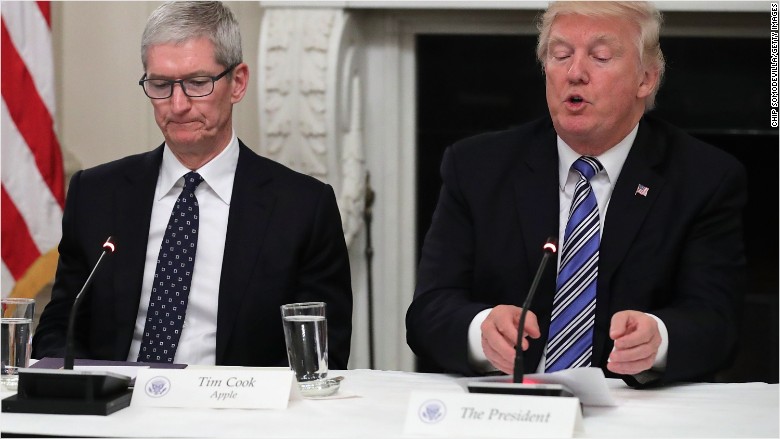
 Donald Trump got a lot of mileage during his presidential campaign from criticizing the poor record of wage growth during the Obama era. Since taking office he has done nothing to directly address the issue. In fact, his administration’s attacks on labor rights have made it more difficult for workers to push for higher pay through unions.
 Money laundering has jumped back to the top of the corporate crime charts, thanks to Steve Bannon’s statements about Trump’s associates as well as the
  The year began with a burst of announcements by the Obama Administration of cases it rushed to resolve before leaving office. In the period between election day and the inauguration, the Justice Department and various agencies announced
 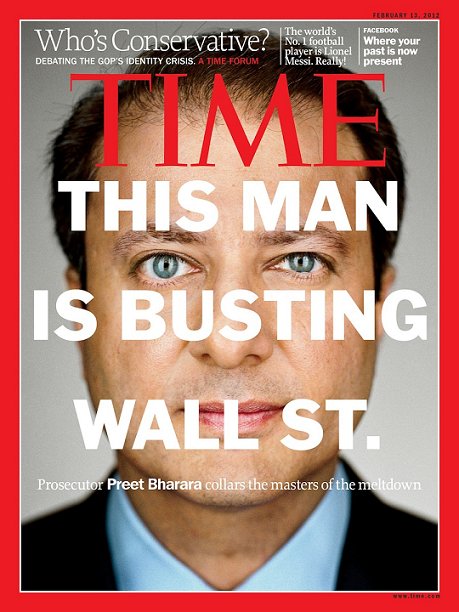 When Donald Trump fired dozens of U.S. Attorneys last March, there was speculation that the main objective was to remove some, especially Preet Bharara in Manhattan, who might be investigating the president’s business interests.
 It’s refreshing to see the book thrown at a corporate criminal, but it would have been even better if federal prosecutors had aimed higher.